Experiments

Diploma Thesis Update at SIPPRE (Robotics)

EEG-Based Motor Imagery BCI for Robotic Arm Control

The SIPPRE Research Group (Signal, Image Processing and Pattern Recognition Group) is pleased to share a progress update from the ongoing diploma thesis of Panagiotis Leventogiannis, entitled:

“EEG-Based Motor Imagery Brain–Computer Interface (BCI) for Robotic Arm Control.”

Current Progress

As demonstrated in the latest experimental video, the robotic hand successfully performs controlled finger closing, validating the mechanical design and actuation pipeline of the system.
The robotic arm and hand are fully 3D-printed in the SIPPRE Lab using the Creality K1C printer, featuring a tendon-driven mechanism optimized for smooth and precise motion.

Research Scope

The thesis aims to develop an end-to-end BCI system that translates EEG-based motor imagery into real-time control commands for a robotic arm. The work brings together:

  • Robotics & mechatronics (3D-printed arm/hand, actuation)
  • Brain–Computer Interfaces (BCI)
  • EEG signal acquisition and processing
  • Machine learning for motor imagery decoding

What’s Next

The next phase of the project will focus on:

  • EEG recordings from human subjects
  • Training and evaluation of motor imagery classifiers
  • Closing the loop between brain signals and robotic control

📣 Call for Volunteers Coming Soon
Announcements for EEG recording sessions and volunteer participation will follow shortly. Stay tuned to the SIPPRE website and social channels for updates.

This project reflects SIPPRE’s ongoing research efforts in BCI systems, neuroengineering, and human–machine interaction, bridging brain signal analysis with real-world robotic applications.

Diploma Thesis Update at SIPPRE (Robotics) Read More »
Call for Participants – Game Experiments on Dynamic Difficulty Adjustment (DDA)

The SIPPRE Research Group (Signal, Image Processing and Pattern Recognition Group) invites students to participate in an experimental study on Dynamic Difficulty Adjustment (DDA) in digital games.

The study is conducted in the context of the undergraduate diploma thesis of Georgios Vasilikopoulos, a student of the Department of Electrical and Computer Engineering, University of the Peloponnese, entitled:

“Dynamic Difficulty Adjustment (DDA) in Games”
(Supervisor: Associate Professor Athanasios Koutras)

Research Objective

The aim of this study is to collect gameplay data from real users through a custom-developed game, in order to:

  • investigate real-time difficulty adaptation mechanisms,
  • analyze player–system interaction,
  • and contribute to research on adaptive and player-centered game systems.

Participation Details

  • Duration: approximately 20 minutes
  • Mode: in-person participation
  • Location: Building K, Office K1.03
  • Anonymity: All collected data are anonymous and confidential, and will be used exclusively for research purposes
  • Questionnaire: After completing the session, participants will be asked to fill in a short online questionnaire

📅 Register to Participate

Students interested in participating are kindly requested to reserve a time slot by selecting a convenient date and time via the following link:

👉 https://calendly.com/basoph2002/dynamic-difficulty-adjustment-in-games-experiments

Your participation will make a valuable contribution to research on intelligent and adaptive game design.

Call for Participants – Game Experiments on Dynamic Difficulty Adjustment (DDA) Read More »

Research Participants Needed: Music & Brain Activity Study

The SIPPRE Group at the ECE Department, is seeking volunteers to participate in our innovative NeuroRock EEG study.

The Experience
  • Listen to carefully selected instrumental rock music through high-quality headphones
  • Wear Enophones, a comfortable and non-invasive EEG headset that feels similar to regular headphones
  • Share your emotional responses to different music styles
  • Total time commitment: Approximately 60 minutes
What to Expect

During this relaxing session, you’ll listen to various rock music selections while we record your brain’s natural responses. The Enophones provide a comfortable recording experience with minimal setup—no gels or extensive preparation required.

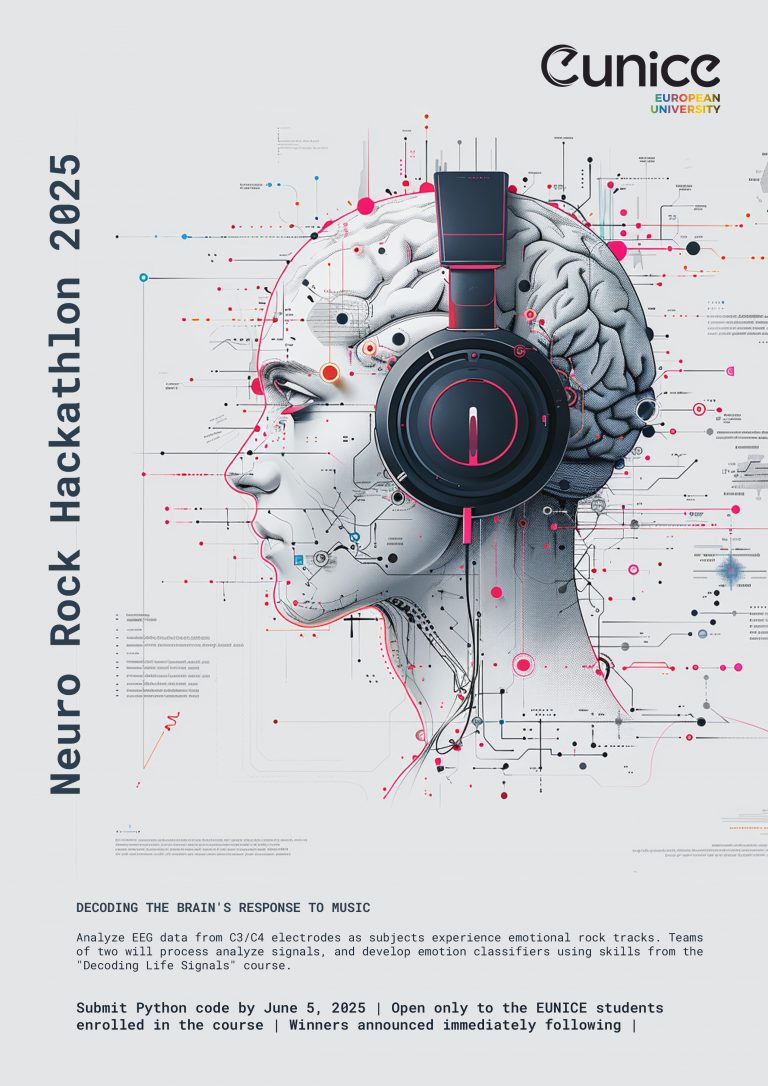
This research supports our groundbreaking NeuroRock Hackathon where EUNICE students will analyze how the brain processes emotional aspects of music.

How to Participate

Please contact Associate Professor Athanasios Koutras (koutras [AT] uop.gr) for scheduling or additional information.

All data will be anonymized and handled according to research ethics guidelines.

Research Participants Needed: Music & Brain Activity Study Read More »

Call for Participants – Binaural Sounds and EEG Activity Study

We are inviting participants to take part in an exciting research project exploring the effects of binaural sounds on brain activity, conducted by the SIPPRE Lab. This study, supervised by Prof. Athanasios Koutras, involves recording EEG signals while listening to binaural audio to investigate how different sound frequencies influence brain rhythms and physiological responses.

About the Study

The study aims to understand how binaural sounds—acoustic illusions created by presenting slightly different frequencies to each ear—affect brainwave patterns and overall brain function. This research is a part of our ongoing efforts to advance knowledge in auditory neuroscience and its applications.

Participant Information

  • Duration: Approximately 1 hour.
  • Activities: Participants will listento audio clips with varying frequencies while their brain activity is recorded using non-invasive EEG equipment. Rest periods are included to ensure comfort throughout the session.
  • Eligibility: Healthy adults aged 18–35 with normal or corrected-to-normal hearing.

What to Expect

The session will include:

  • Baseline EEG Recording: A few minutes of resting EEG recording.
  • Audio Listening: Participants will listen to carefully selected binaural sounds.
  • Feedback: An optional post-experiment questionnaire to share your experience.

Study Highlights

This project is part of the innovative work by George Patsakos and Konstantinos Anestopoulos, members of the SIPPRE Lab. Their efforts aim to push the boundaries of auditory neuroscience, combining EEG recordings with binaural sound analysis.

Join Us

If you’re interested in contributing to groundbreaking research, please contact us to schedule your session. All data will be anonymized, and participation is voluntary.

We look forward to your involvement in advancing this fascinating area of science! For further details or to sign up, please reach out via email [koutras-at-uop.gr].

Call for Participants – Binaural Sounds and EEG Activity Study Read More »